
Table of Contents
- How to Avoid Moving Damage: Start Before Moving Day
- How to Protect Furniture When Moving
- How to Protect Floors During a Move
- How to Protect Walls When Moving Furniture
- Packing Fragile Items and Valuables Safely
- Moving Day Damage Prevention Checklist
- What to Do If Damage Occurs During Your Move
- Frequently Asked Questions
Last Updated: October 11, 2026
How to Avoid Moving Damage: Start Before Moving Day
The biggest mistake people make when moving is waiting until moving day to think about protection. By then, it’s too late. The key is starting your damage prevention strategy weeks in advance.
How to avoid moving damage begins with a clear plan: know what you’re protecting, where it’s going, and what risks exist in your space. Understand your property’s layout, identify vulnerable items, and prepare your team.
Furniture, appliances, flooring, walls, and doorways all need protection. Each requires a different approach. You don’t need expensive equipment, you need a system.
Create a room-by-room protection plan
Walk through your space room by room and list what needs to move, what’s fragile, and what surfaces need protecting. A simple spreadsheet works: include room name, items, protection method, and special concerns. This list becomes your moving day checklist.
Mark hallways, stairwells, and doorways as priority protection zones, these take the most damage.
Document your belongings with photos and video
Before anything moves, photograph each room from multiple angles and shoot video of valuable furniture, artwork, and electronics. This documentation protects you if damage occurs and helps your moving team understand what they’re handling. Store files in the cloud or email them to yourself, don’t rely only on your phone.
How to Protect Furniture When Moving
Furniture is your biggest moving challenge. It’s heavy, awkward, and easy to damage. The solution is wrapping and padding everything before it leaves your home.
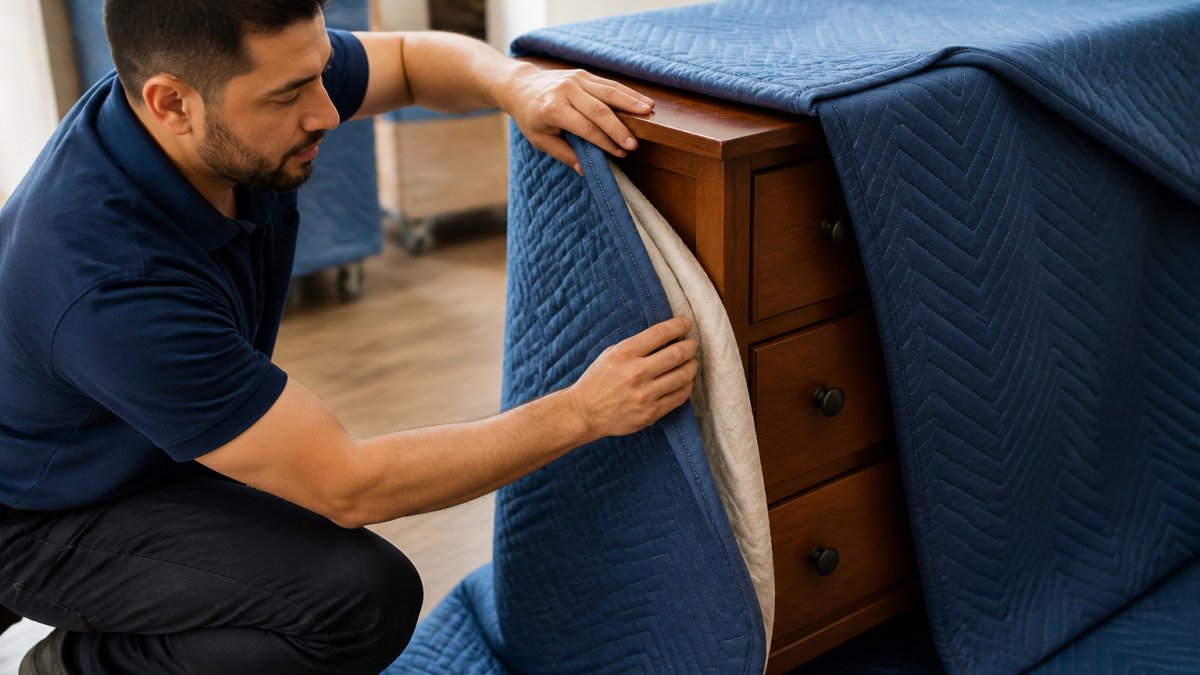
Wrap furniture with moving blankets and padding
Wrap each piece completely with moving blankets, taping only to the blanket itself. Add extra padding around corners and edges with foam or bubble wrap. For upholstered pieces, wrap tightly and use plastic sheeting underneath to keep moisture and dust away.
Disassemble and prepare furniture properly
Disassemble what you can safely remove (table legs, shelving, drawer fronts) to reduce weight and damage risk. Keep hardware in labeled bags taped to the corresponding piece. For delicate items that shouldn’t be disassembled, use extra padding instead.
How to Protect Floors During a Move
Heavy furniture dragging across floors causes scratches, dents, and gouges. Prevention is much cheaper than refinishing. Protection strategy varies by flooring type and weather conditions.
Use floor runners and protective coverings
Roll out floor runners from your front door through hallways and rooms where furniture will travel. Overlap by a few inches and secure edges with painter’s tape. For hardwood floors, layer cardboard under runners in high-traffic zones. In kitchens and bathrooms, use plastic sheeting underneath to prevent water damage.
Adapt protection to your flooring type
Different flooring materials require different approaches:
Hardwood and laminate: These are most vulnerable to scratching and denting. Use runners plus cardboard layering. Avoid dragging furniture directly across the surface. Lift and carry whenever possible, especially on stairs.
Tile and stone: These are scratch-resistant but can crack under concentrated weight. Protect corners and edges where furniture legs might catch.
Carpet: Carpet hides damage but fibers compress permanently under heavy furniture. Use runners plus plywood sheets in areas where furniture will rest temporarily. Remove runners only after all furniture is in place.
Vinyl and linoleum: These are softer and prone to indentation. Use runners plus extra padding in high-traffic areas. Avoid leaving heavy items stationary on the floor for extended periods during the move.
Account for weather and seasonal conditions
Weather significantly impacts floor risk during moves. Wet conditions create slipping hazards and water damage.
Rainy or snowy weather: Lay absorbent material under runners at entry points to catch water. Wipe furniture bottoms before placing them on protected floors. Cold weather: Allow furniture to acclimate to indoor temperature before placing it on finished floors and wipe down condensation immediately. Hot, dry weather: Use extra padding to absorb impact.
Navigate property-specific challenges
Narrow staircases: Protect each stair edge with cardboard or plywood, taped securely. Measure doorways and stair widths in advance. Elevator moves: Protect the elevator floor and walls with cardboard and runners; pad furniture corners carefully. Multi-level homes: Use plywood ramps at transitions to distribute weight evenly. Basement or concrete floors: Use runners and plastic sheeting to prevent stains and moisture damage.
Protect doorways and transitions
Install protective padding around door frames using foam corner guards or pool noodles. Protect doorway thresholds with cardboard or plywood to create a smooth ramp for furniture.
How to Protect Walls When Moving Furniture
Walls get damaged more often than floors during moves. Furniture corners, door frames, and equipment all leave marks and dents. These are expensive to repair.
Guard corners and edges with protective materials
Use foam corner guards at inside corners and doorways. For wall edges where furniture will pass, use painter’s tape to mark the path, then add foam padding to absorb impact.
| Protection Method | Best For | Installation Time |
|---|---|---|
| Foam corner guards | Inside corners, doorways | 5 minutes per corner |
| Door edge guards | Door frames | 3 minutes per door |
| Painter’s tape and padding | Wall edges, hallways | 10 minutes per hallway |
| Cardboard sheets | Stair edges, transitions | 15 minutes per stairwell |
Packing Fragile Items and Valuables Safely
Fragile items break when they shift inside boxes. Fill every empty space so nothing moves during transport.
Choose appropriate boxes and packing materials
Use sturdy boxes rated for the weight you’re packing. Use bubble wrap for glass and ceramics, packing paper for dishes, and foam peanuts for voids, avoid newspaper alone. Pack fragile items in small boxes; they’re easier to handle and less likely to be dropped.
Fill empty space to prevent shifting
After packing, fill every gap with packing material. Shake the box gently, if anything moves, add more filler. Label all fragile boxes clearly with “FRAGILE” and “THIS SIDE UP” on at least two sides.
Moving Day Damage Prevention Checklist
Clear roles and communication on moving day prevent accidents and damage.
Assign clear roles and communication
Assign specific people to specific tasks: one directs traffic, another guides furniture through doorways, a third ensures floor protection stays in place. Use phones to communicate between rooms and the truck. Brief your team on fragile items and special handling.
Safe loading and unloading techniques
Load heavy items first on the truck floor, then stack lighter boxes on top. Secure everything with moving straps or rope. When unloading, reverse the process to prevent crushing.
What to Do If Damage Occurs During Your Move
If damage occurs, respond within 24 to 48 hours. A clear action plan protects your interests.
Document damage immediately and thoroughly
Document damage before cleaning up or repairing anything. Photograph damaged items from multiple angles and record video. Create a written inventory listing each item, damage type, and estimated replacement cost. Do not repair or discard damaged items, store them safely and keep all packing materials for at least two weeks.
Report damage within the required timeframe
Timing is critical. Most moving companies and insurance policies require damage to be reported within a specific window, typically 24 to 72 hours after delivery.
Contact your moving company immediately:
- Call the moving company’s damage or claims department as soon as you discover damage. Do not wait.
- Provide your moving date, invoice number, and a brief description of what was damaged.
- Ask for the formal claims process and required documentation.
- Request the name and contact information of the person handling your claim.
- Ask whether the company wants to inspect the damaged items before you repair or discard them.
Get the claim process in writing:
- Ask the moving company to email you a summary of your report, including the date and time you called, what you reported, and next steps.
- If they don’t send written confirmation, send them an email summarizing your phone conversation and ask them to confirm receipt.
- Keep all emails and correspondence in one folder for your records.
Prepare your claim submission
Once you’ve reported damage, the moving company will provide claim forms or instructions. Prepare a complete submission package.
Gather required documentation:
- Original moving invoice and contract.
- Photographs and video of all damaged items.
- Written inventory of damaged items with descriptions and estimated costs.
- Receipts or proof of original purchase price (if available).
- Quotes from repair services or replacement retailers (if you’ve obtained them).
- Any written communication with the moving company about the damage.
- Proof of payment for the move (credit card statement, bank transfer, receipt).
Submit the claim:
- Complete the moving company’s damage claim form fully and accurately.
- Attach all supporting documentation.
- Submit by the deadline specified in the claim process (usually 30 to 90 days from delivery).
- Send the claim via email or registered mail so you have proof of delivery.
- Keep a copy of everything you submit.
Understand the claims timeline and limits
Moving damage claims follow specific timelines and have financial limits.
Standard liability limits:
Most moving companies offer basic liability coverage. Documenting replacement cost is important, it shows the actual loss and may support a higher claim if the company offers additional coverage options.
Claims processing timeline:
After you submit a claim, the moving company typically has 30 to 90 days to respond. Some companies respond faster.
Dispute resolution:
If the moving company denies your claim or offers less than you believe is fair, ask about their dispute resolution process.
Know when to involve a third party
If the moving company refuses to pay or the amount offered is significantly lower than your documented loss, consider escalating.
Small claims court:
For claims under the small claims limit in your province, you can file in small claims court.
Legal counsel:
For high-value claims or complex disputes, consult a lawyer who handles consumer disputes or contract law. Many offer free initial consultations.
Learn from the damage for future moves
After your claim is resolved, review what happened.
- Did a specific protection method fail? (e.g., blankets tore, runners shifted)
- Was an item packed incorrectly or inadequately protected?
- Did your moving team follow your instructions?
- What would you do differently next time?
This reflection helps you improve your process for future moves and informs decisions about whether to use professional movers, request additional coverage, or invest in better protection materials.
Frequently Asked Questions
What is the best way to protect furniture when moving?
Wrap all furniture with high-quality moving blankets, securing them with tape or straps to prevent slipping. Use corner protectors on sharp edges and disassemble large pieces when possible. Place furniture strategically in the truck with heavier items on the bottom and lighter pieces on top. For specialty items, use furniture pads underneath legs to reduce friction and scratches. Professional movers often use additional protective coverings for high-value pieces to ensure safe transportation.
How can I protect floors and walls during a move?
Install floor runners or heavy paper across walkways, entryways, and hallways to prevent scuffs and damage to wood floors and carpeting. Use corner guards and edge protectors at doorways and tight corners where furniture is most likely to make contact. Tape cardboard or foam padding directly to wall areas where furniture will pass. Cover stair edges with protective material, and consider using plywood sheets in high-traffic zones. These preventive measures significantly reduce scratches, dents, and scuffs on your property.
What should I do if something gets damaged during a move?
Document the damage immediately with clear photos and video before the moving truck leaves. Note the date, time, and specific details of what was damaged. Contact the moving company right away with your documentation and provide a written description of the damage. Ask about their damage claim process and required timeframes. Keep all packing materials and boxes as evidence. Professional moving companies typically have procedures for addressing damage claims, so understand their policy before your move begins.
How do I prepare my home before movers arrive?
Clear pathways and remove obstacles from hallways, doorways, and stairwells to prevent accidents and damage. Protect high-traffic areas with floor runners and protective coverings before the moving team arrives. Remove doors from hinges if they obstruct access, and cover light fixtures or decorative elements that could be damaged. Identify fragile items and valuables that need special handling, and brief the moving team about any delicate pieces. This preparation reduces rushing on moving day and helps prevent damage to both your belongings and your home.